The Japandi edit — where simplicity meets warmth
There's something quietly compelling about a space that doesn't try too hard. A room where natural materials speak for themselves, where every object has a purpose and where there's room to appreciate the small moments of everyday life.
That's the beauty of Japandi style. Bringing together the clean lines and functionality of Scandinavian design with the Japanese appreciation of craftsmanship, simplicity and the imperfect beauty of natural materials, Japandi creates interiors that feel both carefully considered and wonderfully relaxed.
And nowhere does this approach feel more at home than in the kitchen.
A meeting of two design traditions
The word Japandi is a blend of Japanese and Scandinavian, and the style is exactly what the name suggests: a meeting of two design traditions that share a surprisingly similar outlook.
Both celebrate natural materials, simple forms and thoughtful craftsmanship. Both favour quality over excess and recognise that the objects we use every day can be beautiful as well as functional.
Japandi brings these sensibilities together, combining the warmth and comfort associated with Scandinavian, and especially Danish (our speciality) interiors with the restraint and quiet elegance of Japanese design.
The result isn't minimalism for minimalism's sake. It's about creating a home that feels calm without feeling empty, and beautiful without being precious.
In the kitchen, that means carefully considered cabinetry, natural textures, understated colours and enough breathing space for the materials and details to shine.
The beauty of a simple line
One of the most distinctive qualities of Japandi design is its attention to proportion and detail.
Nothing needs to shout for attention. Instead, the beauty often lies in a carefully considered line, a subtle frame or the gentle rhythm of repeated forms.
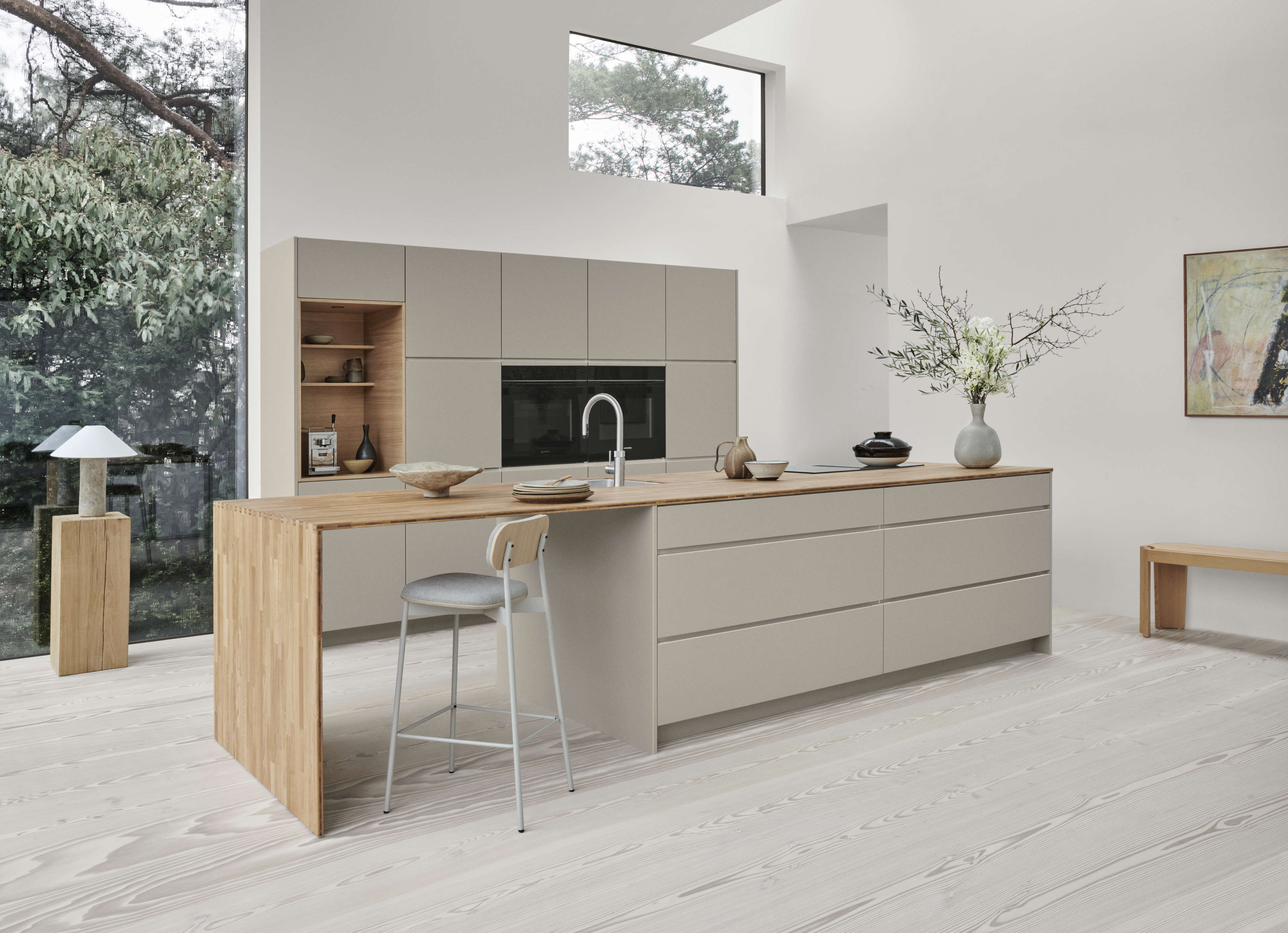
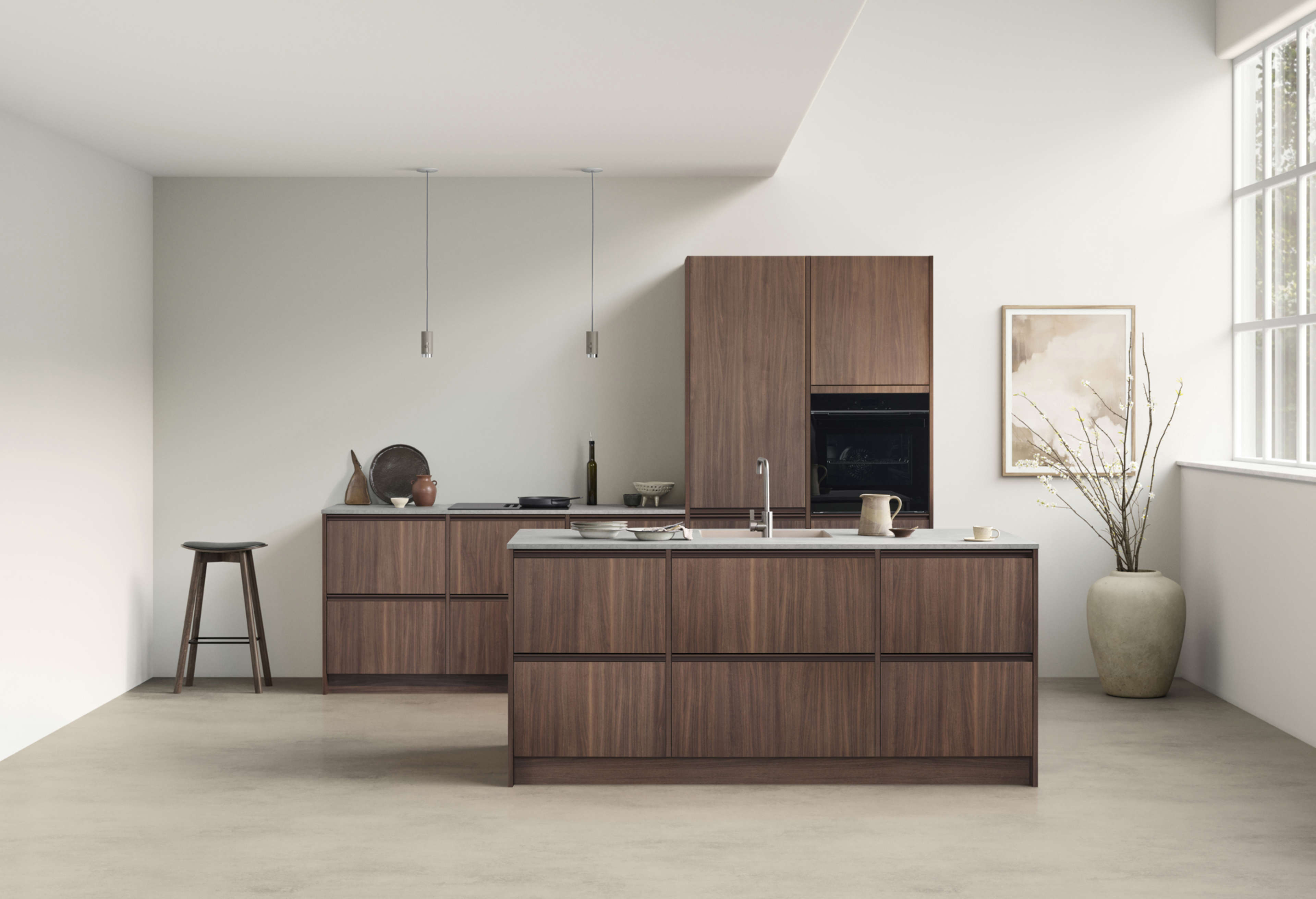
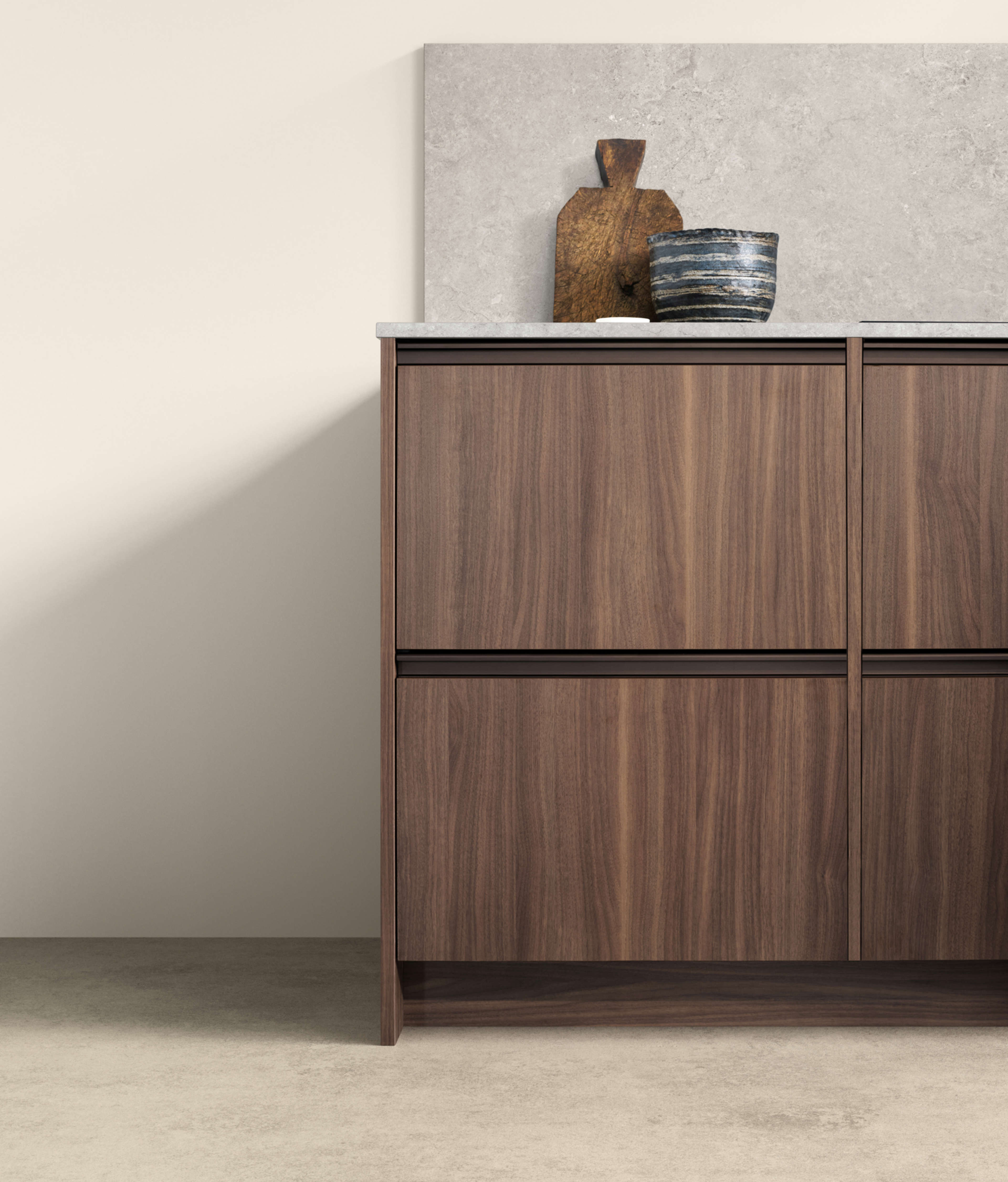
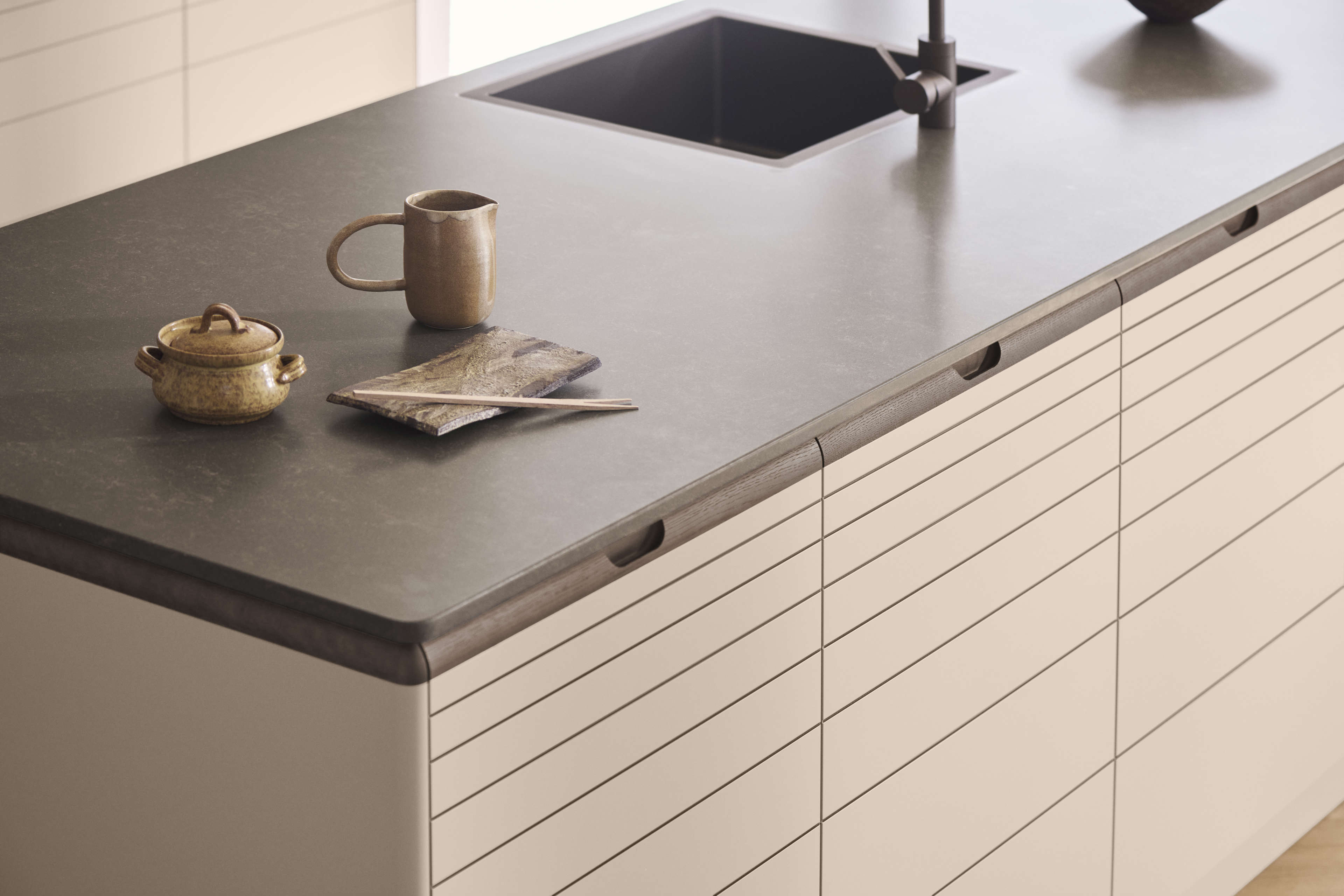
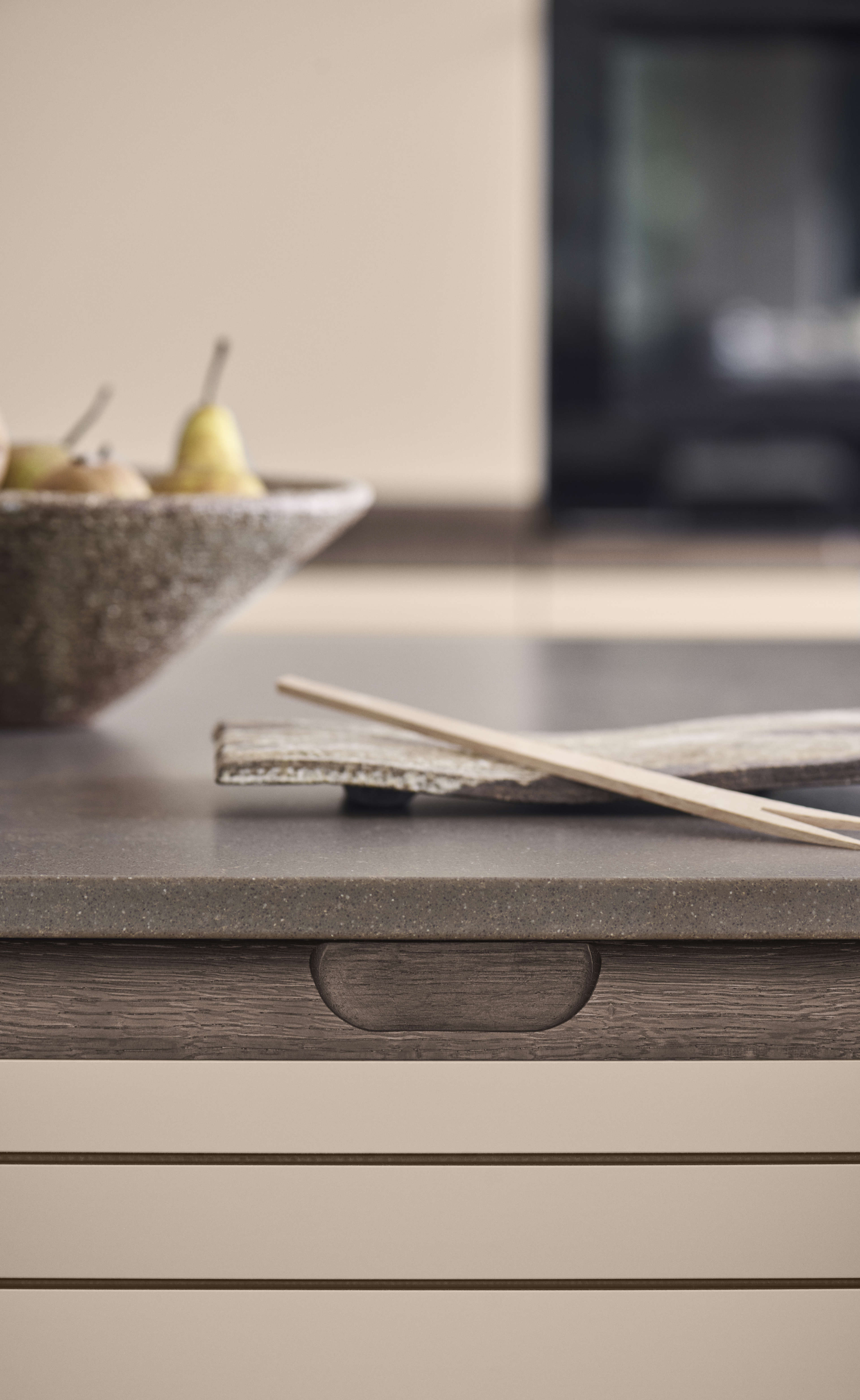
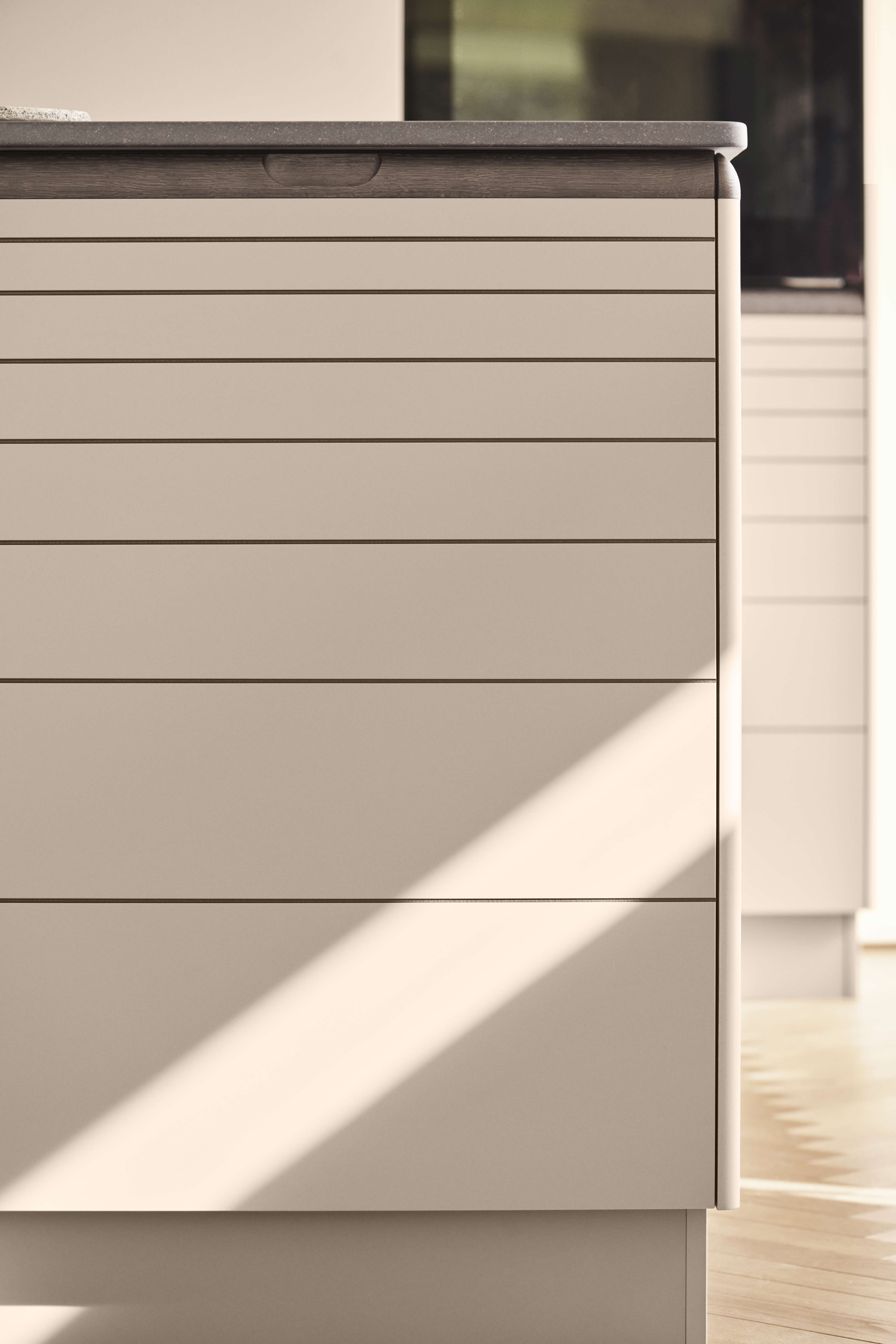
This is where the new Compose kitchen with Japandi-inspired lines comes into its own. Its linear detailing adds architectural interest while maintaining the clean, understated expression that makes Japandi so appealing.
There's a pleasing sense of order in these designs, but they don't feel rigid. The lines introduce texture and depth without unnecessary decoration, allowing the kitchen to remain calm and uncluttered.
It's a balance that works particularly well when combined with smooth surfaces, simple worktops and carefully chosen accessories.
After all, simplicity doesn't have to mean a lack of character. Sometimes it's the smallest details that make the greatest impression.
Japandi in focus — the beauty of Align
A softer touch – textiles in the Japandi kitchen
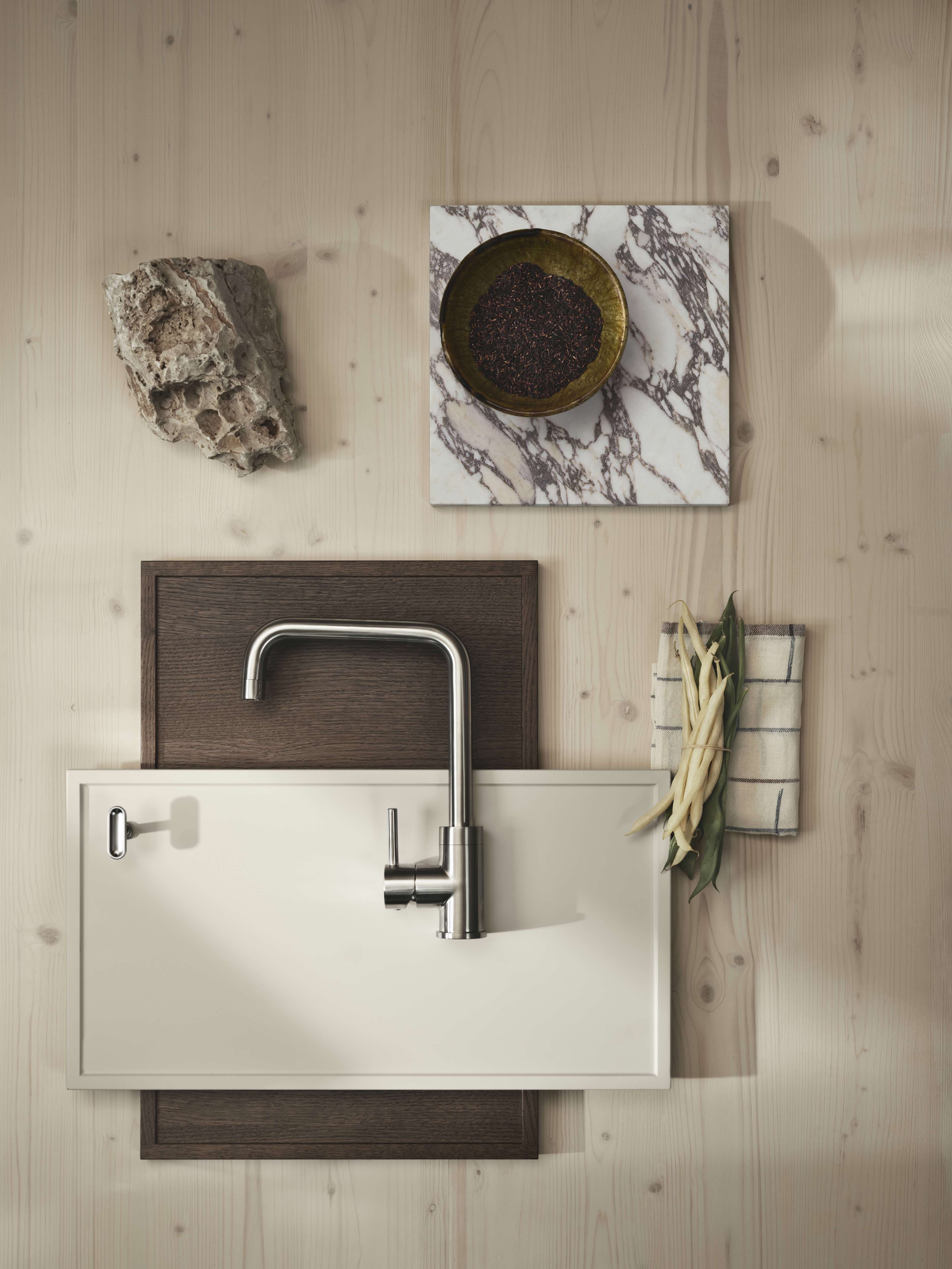
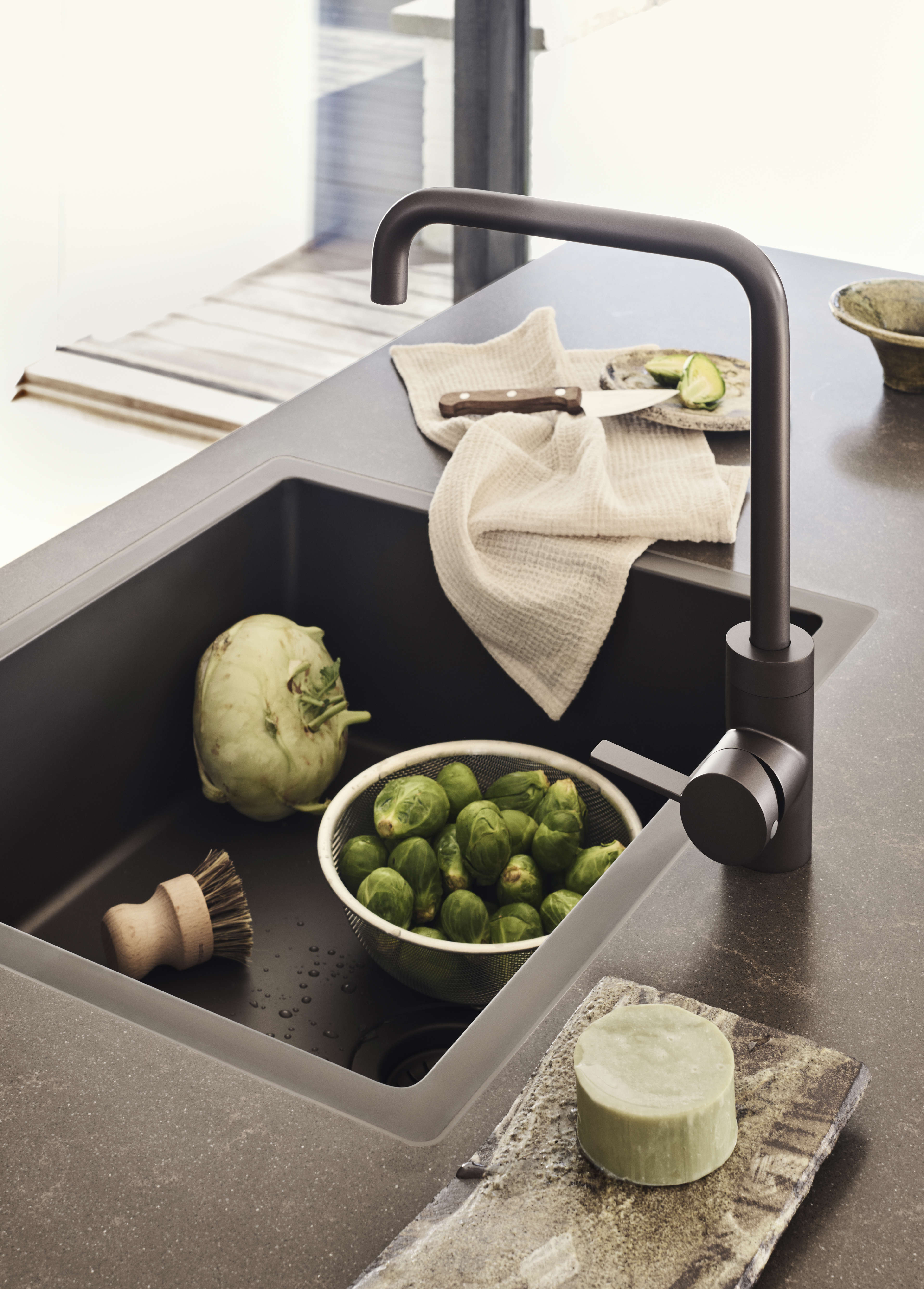
Kitchens are full of hard surfaces: wood, stone, glass, metal and ceramics. Which is precisely why textiles can make such a difference.
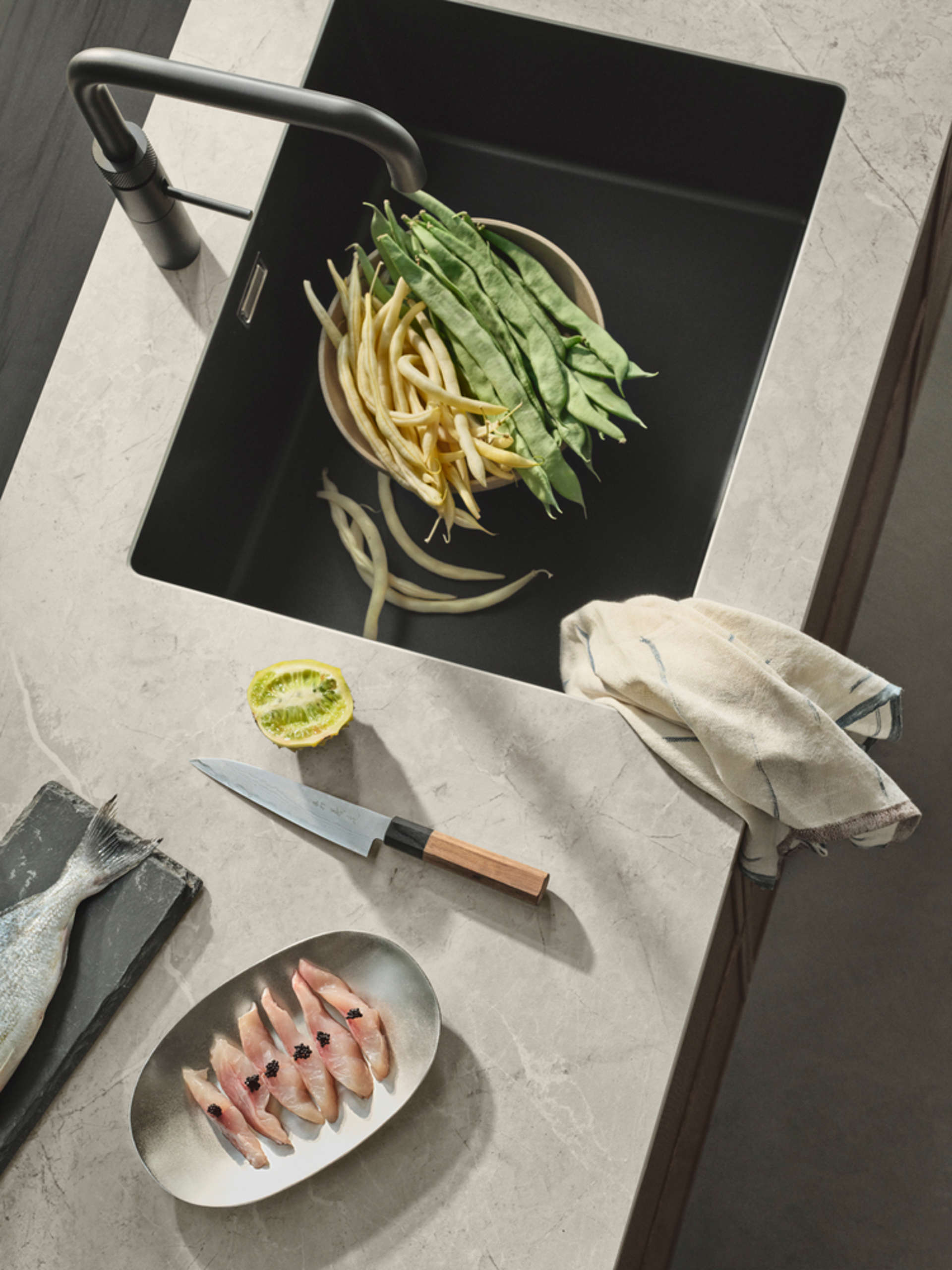
A softly draped linen tea towel, a handwoven cloth or a textured table runner introduces something wonderfully tactile to the space. These small details soften the harder edges of the kitchen and make it feel more lived in.
In Japandi interiors, textiles tend to be understated rather than decorative. Natural fibres, visible weaves and gentle variations in texture bring interest without overwhelming the room.
Think linen, cotton and handwoven fabrics in shades of oatmeal, warm white, soft grey, earthy brown or indigo.
There's also something appealing about textiles that show the hand of the maker. A slightly irregular weave or a beautifully textured surface adds individuality and a sense of craftsmanship that perfectly complements the Japandi aesthetic.
And these don't have to be precious objects, kept safely out of reach. A well-loved kitchen towel or a simple woven placemat can be just as beautiful as something displayed on a shelf.
The Japandi approach is to make the everyday feel special, not to save beautiful things for special occasions.
The art of balance
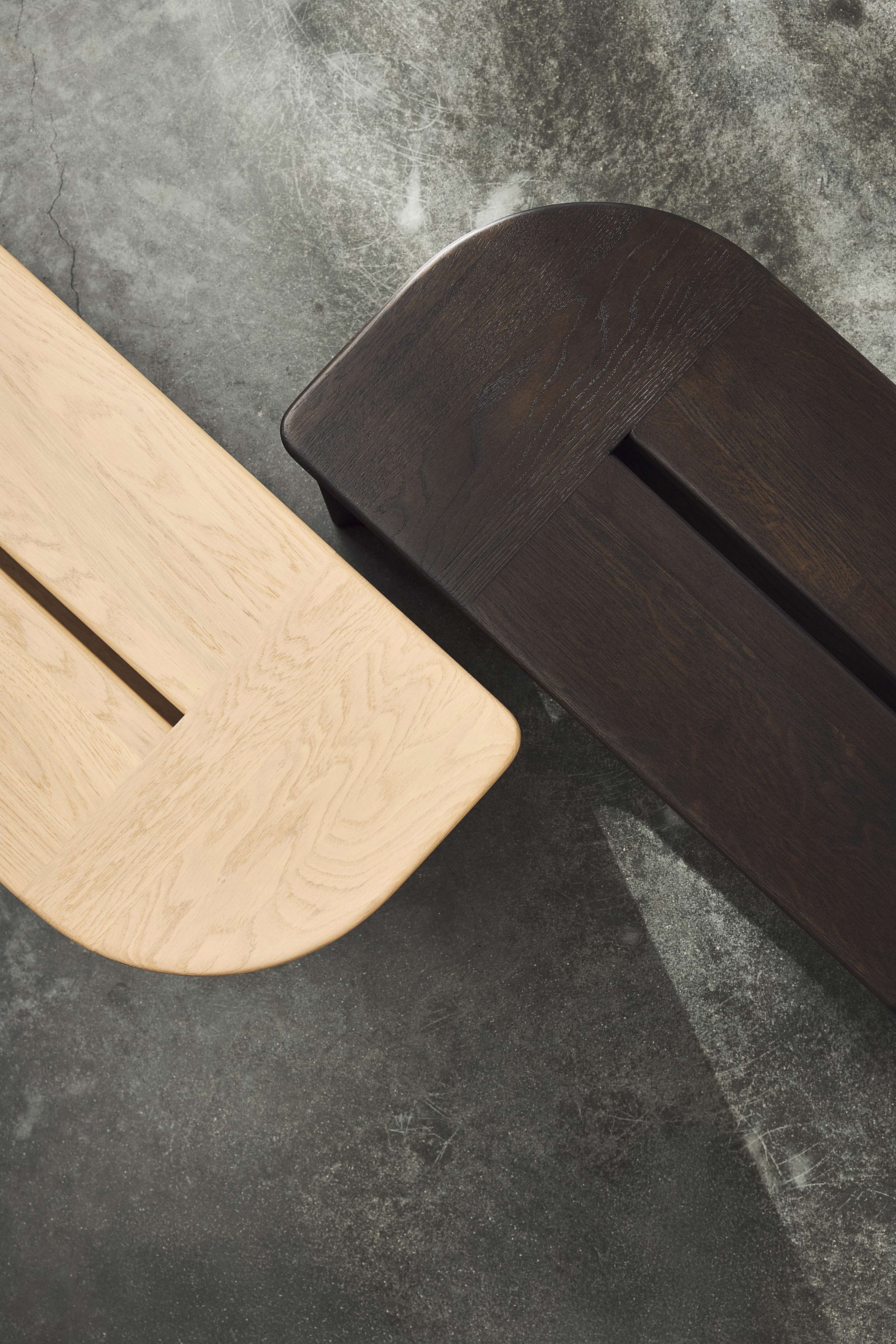
Light and dark. Warmth and simplicity. Contrast and harmony. Inspired by the Japanese concept of yin and yang, our Sociable Bench in light and dark oak is a beautiful reminder that opposites can complement one another perfectly.
With its softly rounded edges, natural wood grain and understated Danish design, The Sociable Bench captures the essence of Japandi style. Two contrasting finishes, each with its own character, yet sharing the same simple, thoughtful expression.
Because sometimes, finding the perfect balance is what makes a design truly beautiful.
Bring the outside in
Nature plays an essential role in Japandi interiors, not just through the materials we choose but through the relationship between the home and its surroundings.
Natural light, views of greenery and the changing seasons all contribute to a sense of calm and connection.
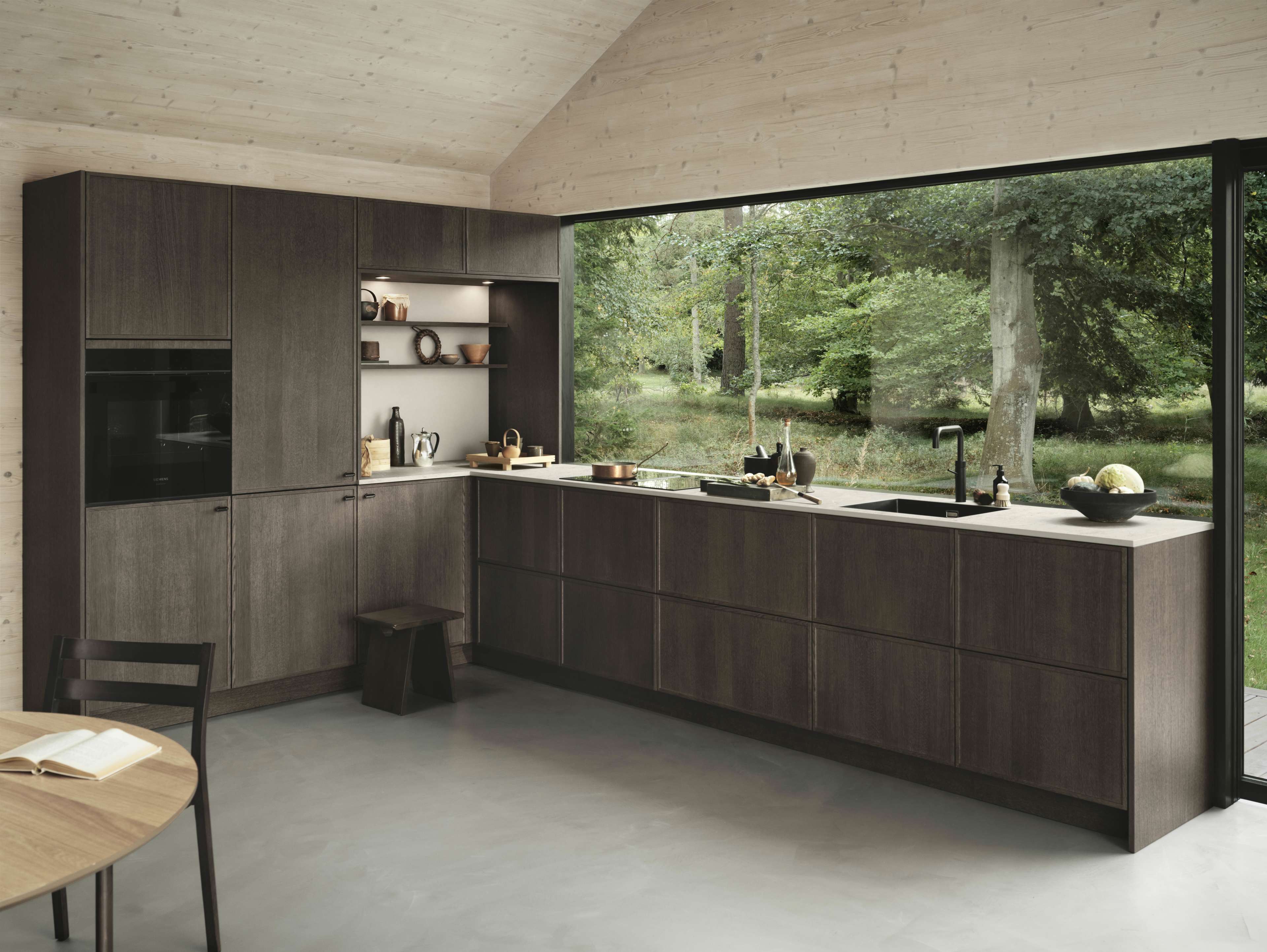
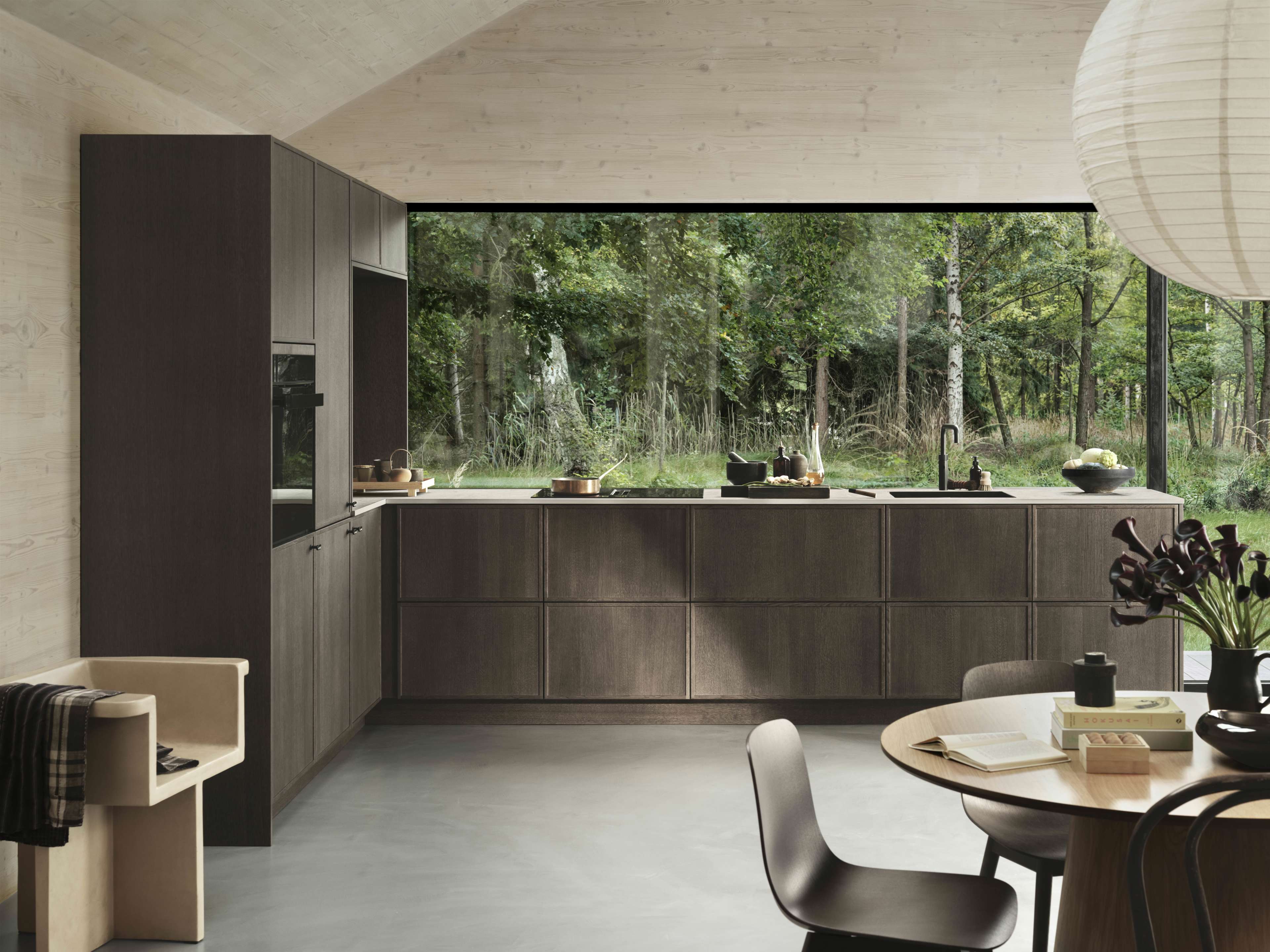
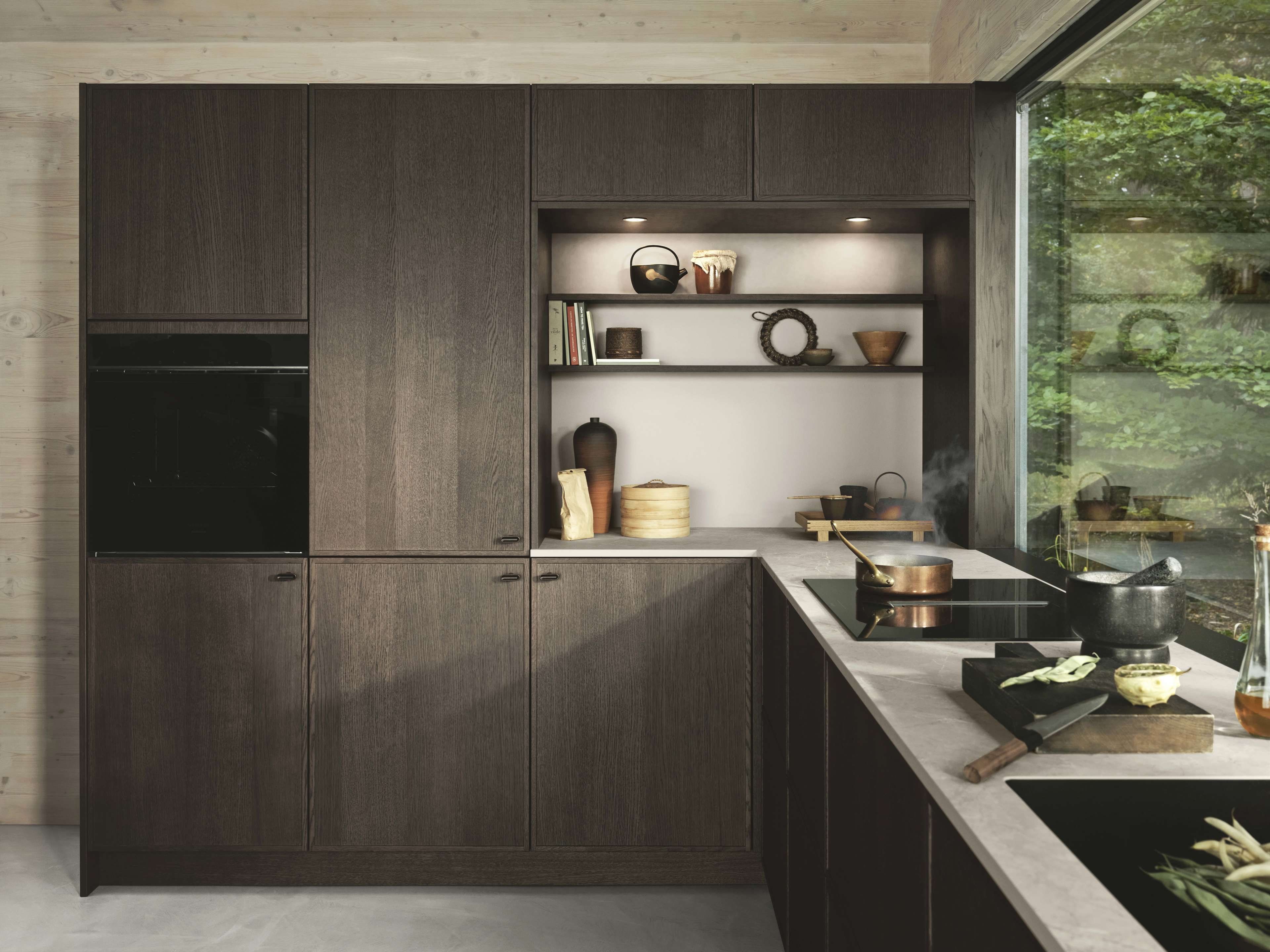
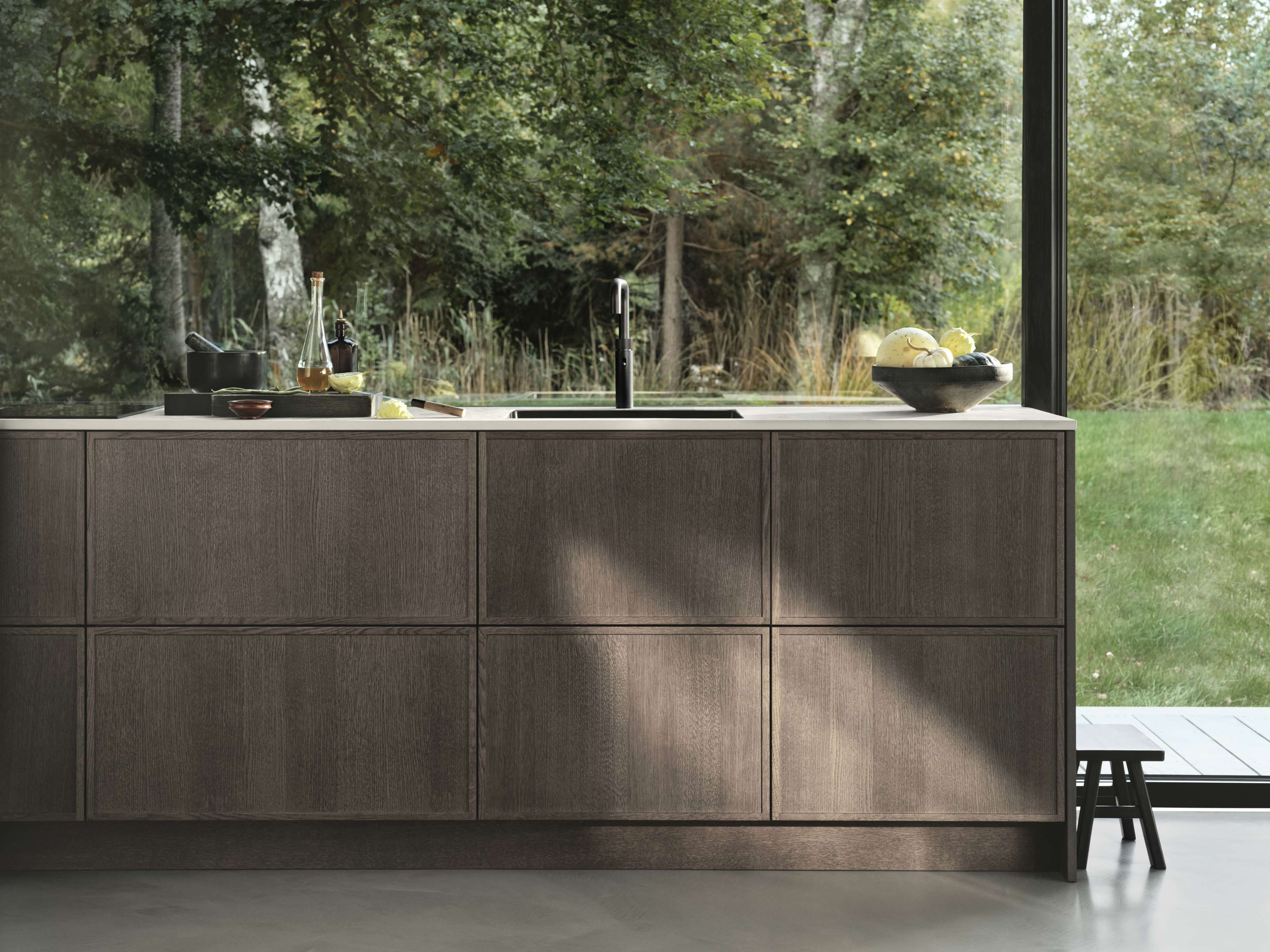
In our Grace kitchen, large windows open the room to the landscape beyond. The deep brown oak cabinetry creates a beautiful contrast with the fresh green foliage outside, while the pale worktop reflects the natural light.
The effect is almost as though the kitchen is part of the landscape.
Of course, not every home comes with floor-to-ceiling windows overlooking a leafy garden. But the principle is easy to bring into almost any space.
A few carefully chosen plants, a branch in a simple vase, natural wood surfaces or a colour palette inspired by the outdoors can create a similar feeling of connection.
And don't underestimate the importance of daylight. Keeping window areas uncluttered and choosing materials that respond beautifully to natural light can make a remarkable difference.
Everyday objects, beautifully considered
One of the loveliest things about Japandi style is the way it celebrates ordinary objects.
A handmade ceramic teapot. A wooden spoon worn smooth with use. A simple stoneware cup. Objects chosen not because they're fashionable, but because they're useful, beautiful and a pleasure to handle.
Rather than filling every shelf, Japandi interiors give individual pieces room to breathe.
Open shelving offers a lovely opportunity to display a few favourite objects, especially when they're grouped thoughtfully and combined with plenty of empty space.
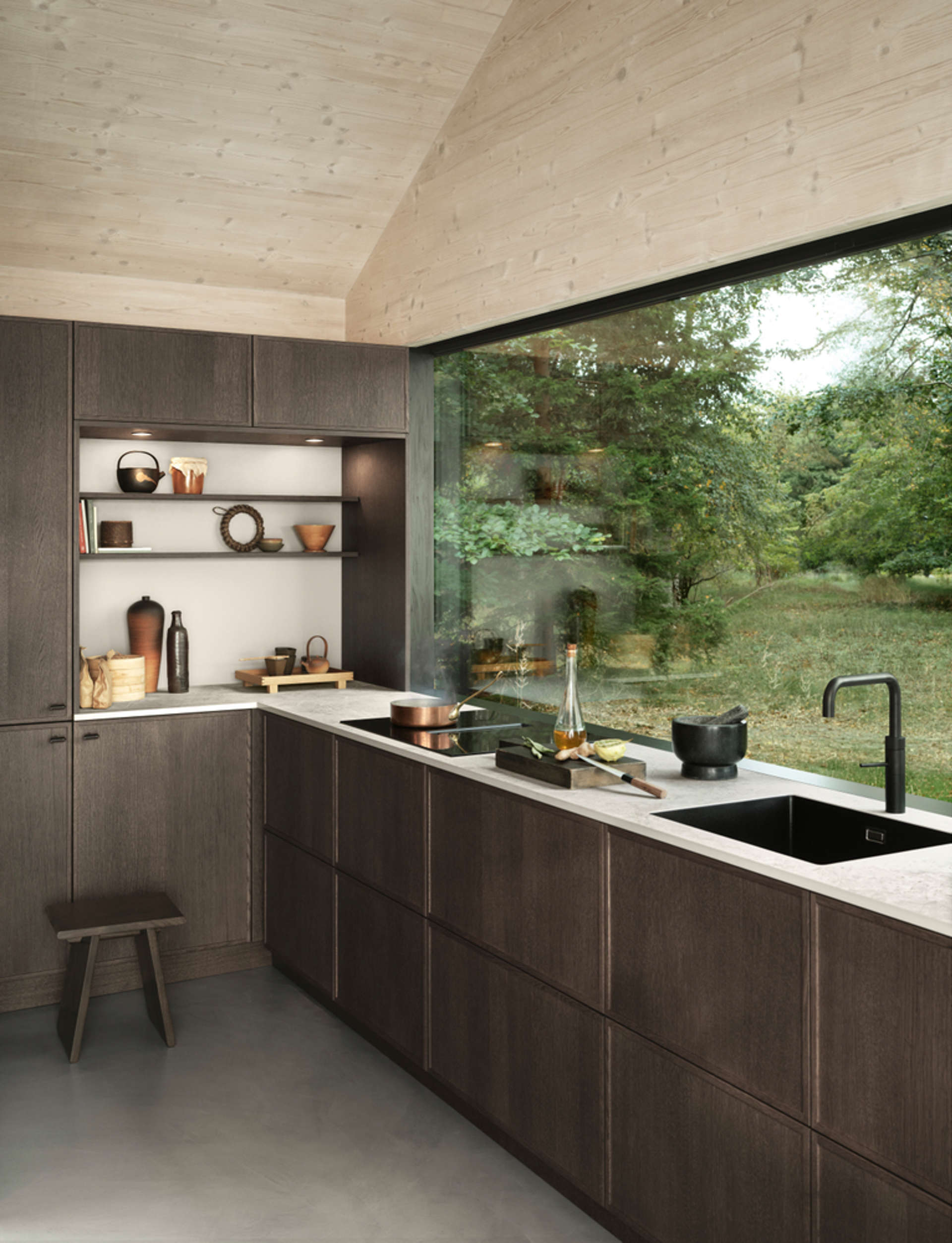
In the Grace kitchen, the open shelving creates a gentle contrast to the surrounding cabinetry. Ceramics, wooden objects and a few carefully chosen accessories bring personality to the room without disturbing its calm expression.
This appreciation of simple, handmade objects has a connection to the Japanese aesthetic of wabi-sabi, which finds beauty in imperfection, natural variation and the passage of time.
It's a refreshing reminder that a home doesn't need to be perfectly styled to be beautiful.
In fact, sometimes the slightly imperfect things are the ones we love most.
Less, but more meaningful
Perhaps the most important aspect of Japandi style is that it isn't really about following a set of decorating rules.
It's about being thoughtful with what we bring into our homes.
Choosing materials that feel good to live with. Creating storage that keeps everyday clutter under control. Leaving room for favourite objects, natural light and the small rituals that make a kitchen the heart of the home.
It's an approach that feels especially relevant as we look towards the kitchen trends of 2027, where warmth, tactility, craftsmanship and timeless design are becoming increasingly important.
Whether you're drawn to the rich wood and framed details of Grace or the understated linear expression of Compose, Japandi offers a way to create a kitchen that feels contemporary without being tied to a particular moment.
Because ultimately, the most beautiful kitchen isn't necessarily the one with the most things in it.
It's the one where everything feels just right.
Explore our Grace and Compose kitchens and discover how Danish design can bring a little Japandi calm into your everyday life.